

The handling method for valve failure
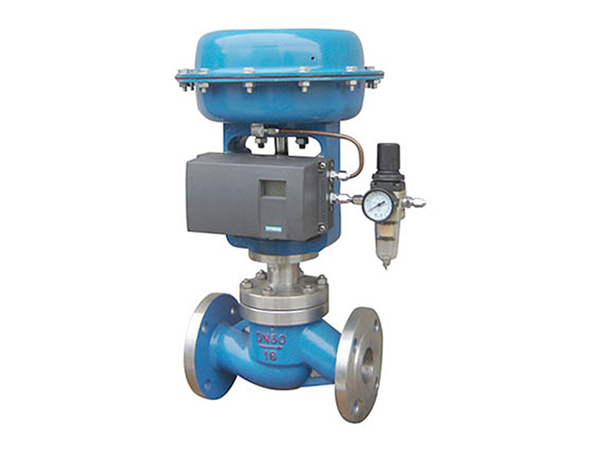
Pneumatic control valves are powered by compressed air and use cylinders as actuators. They are driven by accessories such as valve positioners and converters to achieve on-off or proportional regulation, and receive control signals from industrial automation control systems to complete the regulation of various process parameters such as the flow, pressure, and temperature of the pipeline medium.
Currently, pneumatic control valves are widely used in process industries such as petrochemicals, power, and metallurgy. They are an indispensable important link in the control system. Therefore, it is very important to ensure the stable and reliable operation of pneumatic control valves. When a pneumatic control valve malfunctions, troubleshooting can be carried out based on common faults of the control valve to quickly identify the cause of the failure.
1. Air source failure
▶ The air source at the site is not turned on;
▶ The air source contains water and is frozen in cold weather;
▶ The supply of purified air stops;
▶ The main air pipe leaks or the air line is blocked, resulting in low air pressure, causing the control valve to fail to fully open or close, or not to operate at all;
▶ The air filter and pressure reducer have been used for a long time, with too much dirt, causing the black knob under the pressure reducer to open and leak air, resulting in the output air pressure being less than the specified pressure, causing the control valve to fail to fully open or close, or not to operate at all;
▶ The air line at the site leaks, the connection is loose, resulting in insufficient air pressure, causing the control valve to fail to fully open or close, or not to operate at all;
▶ The air line at the site leaks, the connection is loose, causing insufficient air pressure, resulting in the control valve not being able to fully open or close, or not operating at all;
▶ The air line at the site leaks, the connection is loose, causing insufficient air pressure, resulting in the control valve not being able to fully open or close, or not operating at all;
▶ The air filter and pressure reducer malfunction, resulting in unstable air pressure and causing the control valve to oscillate.
2. Wiring failure
▶ The connection terminals of the power line are loose, detached, short-circuited, or broken, the circuit board is too dusty, causing poor contact and signal fluctuation, resulting in vibration of the control valve;
▶ After heavy rain or typhoon, the equipment gets wet and damp, causing short circuits in the connections, resulting in the control valve not being able to fully open or close;
▶ The polarity is reversed, causing the control valve not to operate;
▶ Faults in the middle section of the power line, due to the failure of the insulating tape, the insulation skin of the wire falls off, causing a short circuit between the wires, due to the vibration at the site, the wire breaks, resulting in the control valve not operating continuously or oscillating, unable to fully open or close, or not operating at all;
▶ Wiring errors after the control valve repair, resulting in the control valve failure;
▶ The output signal of the control valve is unstable, resulting in fluctuation in the control valve operation.
3. Positioner failure
▶ The fixing nut of the feedback rod is loose and falls off, the spring on the feedback rod falls off, causing the feedback rod to loosen, fall off, and get stuck, resulting in oscillation of the control valve;
▶ The position sensor in the positioner malfunctions, when the vibration reaches the bad point, it will cause the display in the control room to exceed the limit, and then return to normal after a while, which can be solved by replacement;
▶ The PID parameters of the positioner are not set properly;
4. Valve body failure of the control valve
▶ The valve core or valve seat is worn (due to the erosion of the medium, rust, welding slag, etc., the abrasion and wear), stuck (blocked by various impurities in the medium), or the seal is not tight (the sealing ring is worn), resulting in excessive medium flow when the valve is fully closed, unable to control;
▶ The packing of the control valve is too tight or too loose, too tight causing the valve stem to move slowly or jump, too loose causing medium leakage. If it is heavy oil, it is very likely to burn, causing a major accident;
▶ The pipeline and valve body are not concentric when installed, causing excessive additional stress on the control valve, resulting in oscillation, unable to fully open or close, etc.;
▶ The fixing nut of the valve stem and the connecting piece is loose, causing the valve stem and the valve core to be out of alignment, resulting in the valve not closing tightly, the stress increasing, causing the valve stem to vibrate at high frequency, or even break;
▶ The membrane head of the control valve is faulty, due to long-term use, aging and deterioration of the diaphragm, reduced elasticity, poor sealing, leakage of the diaphragm, aging of the compression spring, reduced elasticity, and breakage, resulting in the control valve not being able to fully open or close, or losing control;
▶ The valve core falls off, the valve core and the valve seat are stuck, the valve stem is bent or broken, which will cause the control valve to operate normally, but not have the regulating effect.